History
The History of Jefferson Dad Vail Regatta
-excerpted from “The Dad Vail Story,” by U.T. Bradley,
(c)1962
The story of the Dad Vail Rowing Association must begin with mention of two men, “Rusty” Callow, then coach at Pennsylvania, who laid the foundation, and Lev Brett, the architect.
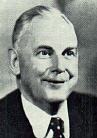
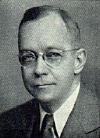
“Rusty” furnished the idea of promoting competition among colleges struggling to found rowing. These fell into two classes: those too small ever to hope to compete in the “big time,” and those larger institutions not yet ready for such competition. To furnish the incentive, “Rusty” put into competition in 1934 a trophy which he named in honor of his friend Harry Emerson “Dad” Vail, for years coach at the University of Wisconsin. Hence our name.
The name “Dad” Vail has become synonymous with our Association. Lest. we forget, something about the man himself should go into this record. Harry Emerson Vail was born in Gagetown, New Brunswick, Canada. Like his famous contemporaries, Charles Courtney of Cornell, and Jim Ten Eyck of Syracuse, he learned his rowing as a successful professional sculler.
Previous to his work at Wisconsin, Coach Vail had been coach at Georgetown Prep, Ariel Boat Club, and Harvard. However, it was through his work at Wisconsin that Coach Vail became widely known.
In reply to a letter asking him why he gave the name to the original trophy, and so to the Association, the late “Rusty” Callow wrote as follows:
 Harry “Dad” Vail was a great coach, who year after year kept Wisconsin in crew. He was little recognized away off there in Madison. He was such a grand spirit, with a spiritual nature, a man of infinite patience and good character. And he knew rowing.
Dad” Vail was a lovable character, entirely devoid of secretiveness or slyness, and with a great natural sense of humor. I recall one year observing that he was going up one side of the Hudson River in his coaching launch, and across the river, about half a mile away, rowed his Wisconsin crews. So, I asked him: “‘Dad,’ why do your crews go up one side of the river, and you in your launch up the other side? Your lads can’t hear anything you may say.” He replied, “You know, ‘Rusty,’ I’ve found out from experience that the farther off they are, the better they look.” That was “Dad” Vail.
“Rusty” enclosed with his reply a faded clipping, evidently extracted from a scrapbook, containing a write-up on “Dad” Vail by Oliver E. Kueehle of the Madison Journal staff. In part, it reads:
There is something gallantly heroic about “Dad” Vail, as standing in his little coaching launch out near Picnic Point, he preaches the gospel of rowing to the men in the boats.
“Dad” has a hard time of it at Wisconsin. Ile has a harder time than any coach who sends his crew down the four punishing miles of the Hudson in June. He has not the material, or the facilities, or the time other schools have, yet he must race ‘against their crews in June. A heroic figure indeed as he coaches.
Reading this, our coaches must feel that our Association is well named. Here was a kindred spirit, working against the same handicaps most of us have faced in the early years at least, inadequate equipment, insufficient manpower, lack of interest, and often isolation from rowing neighbors to help make possible an adequate schedule.
The first of four races before the formation of the present association were held in 1934 with “Rusty” and The University of Pennsylvania as hosts. Marietta College, coached by Ellis MacDonald won the first leg on the new trophy by finishing second to a Penn sub-varsity boat which was an added entry. Rutgers, coached by Ned Ten Eyck, was third and Manhattan, coached by “Skippy” Walz was fourth.
At Marietta in 1935, Rollins College joined the field of four competing for the trophy, and there were two added entries ineligible for the trophy, Wisconsin, invited because of the “Dad” Vail connection, and a Pennsylvania crew which was in reality a sub-varsity which “Rusty” billed as the varsity to add interest. With sportsmanship typical of him, when that Penn crew lost, “Rusty” stuck to it that on that day, it was the Penn varsity. He was not the man to detract from the sweetness of the Rutgers victory. The order at the finish was: Rutgers, Penn, Marietta, Wisconsin, Manhattan and Rollins. This was the only Dad Vail race, ever rowed at two miles, and one of two followed by an observation train, the other also being at Marietta in 1941.
That 1935 “Mid-American” Regatta at Marietta is a good illustration of the difficulties of those early years, and of the assistance the “haves” rendered the “have-nots.” Of the Dad Vail group, only Rutgers owned anything but hand-me-down equipment. So, both the new Rutgers Pococks, the “Lev Brett” and “Ned Ten Eyck” were sent by train, along with four Penn boats, Wisconsin having had its boat smashed to splinters on the way through Chicago. “Rusty” Callow’s sleep on the Pullman was interrupted when the train came to a grinding halt. Next morning at breakfast, when he asked the conductor what had happened, he was informed that a baggage car full of “canoes” had jumped the track during the night and been left in the mountains of West Virginia. It was a tense Friday at Marietta for crews of six colleges with no boats. When the baggage car finally arrived at dusk it did not contain a load of kindling; the total damage was one bent outrigger.
There was no race for the Dad Vail Trophy in 1937; in 1936 and 1938, only Rutgers and Manhattan competed on the Harlem, Rutgers winning both times. With no formal organization, the whole splendid idea seemed near death. Then Lev Brett went into action. His own account of what followed is worth quoting:
With the lack of organization, the initial impetus generated by “Rusty” Callow seemed to be grinding to a halt. I wrote “Rusty” in the summer of 1938 about what appeared to be an ambitious plan to form a real Association using as a nucleus the colleges which had entered varsity crews in any of the race for the Dad Vail Trophy.
A meeting was arranged (That means that Lev arranged it) for January 14, 1939, at the Central Office of Eastern Intercollegiate Athletics and the following individuals were present: William H. McCarter, John M. Harmon, and George Little, Directors of Athletics at Dartmouth College, Boston University, and Rutgers University respectively; Allen Walz and Charles Logg, rowing coaches at Manhattan and Rutgers. I was elected temporary chairman and “Skip” Walz, temporary secretary.
A formal organizational meeting was set for February 10, 1939. The February meeting may be said to have founded the Dad Vail Rowing Association. Additional colleges, where rowing was in its infancy, were invited to send delegates. The roster of charter member colleges and their delegates follows:
Rutgers University: George Little, Athletic Director, Charles Logg, coach, Cuno Bender and Leverich Brett.
Manhattan College: Herbert Kopf and Allen Walz, coach.
Boston University: George Little, proxy for Doctor John Harmon, Athletic Director.
Dartmouth Rowing Club: William Wortherspoon, student president.
American International College: James E. Nesworthy, student coach and captain.
Marietta College: Charles Jennings and Ellis MacDonald, coach.
Richmond University: George Little, proxy for James Littler, captain.
Rollins College: Allen Walz, proxy for Doctor U. T. Bradley, coach.
A constitution was adopted, and Ellis MacDonald was appointed chairman of the by-laws committee. The first permanent officers were elected as follows: Chairman of the Board of Stewards, Lev Brett; Secretary-Treasurer, Allen Walz. The original Board of Stewards, each member named by the competent authority of his college, consisted of: Lev Brett, Rutgers; Walz, Manhattan; Robert North, Dartmouth; Jennings, Marietta; Nesworthy, American International; Bradley, Rollins.
It is perhaps peculiar that often, Dad Vail coaches have served as Stewards. This has been practicable since these colleges usually lacked a body of rowing alumni who were available for such a service, and the coaches were often the “Mr. Rowing” of their institutions, in some cases having founded it. In most cases they were volunteers, and sometimes faculty members.
The objectives of the Dad Vail Rowing Association are set forth in the constitution as follows: “to perpetuate the ‘Dad’ Vail tradition, foster and encourage intercollegiate rowing among colleges new to the sport, and promote schedules for member schools.”
A significant fact is pointed out by the following statistics: in the first association regatta seven colleges sent seven varsity crews to Red Bank. At Philadelphia in 1961, twenty colleges sent forty crews to compete in varsity, JV, and freshman races. Certainly, no member of that organizational meeting in 1939, not even Lev Brett, could have dreamed of such growth.
In 1976 the Dad Vail Regatta was one of the first intercollegiate regatta to host women’s events. Today approximately fifty percent of the competitors at the Dad Vail are female athletes.
Today the Dad Vail consistently hosts over five hundred entries in over forty events including Para Rowing and sculling.